
By Faith Sonya
When people think about school emergencies, they often think of fires, floods, or violent attacks. Yet one of Kenya’s most heartbreaking school tragedies occurred during an ordinary school day as pupils were simply heading home.
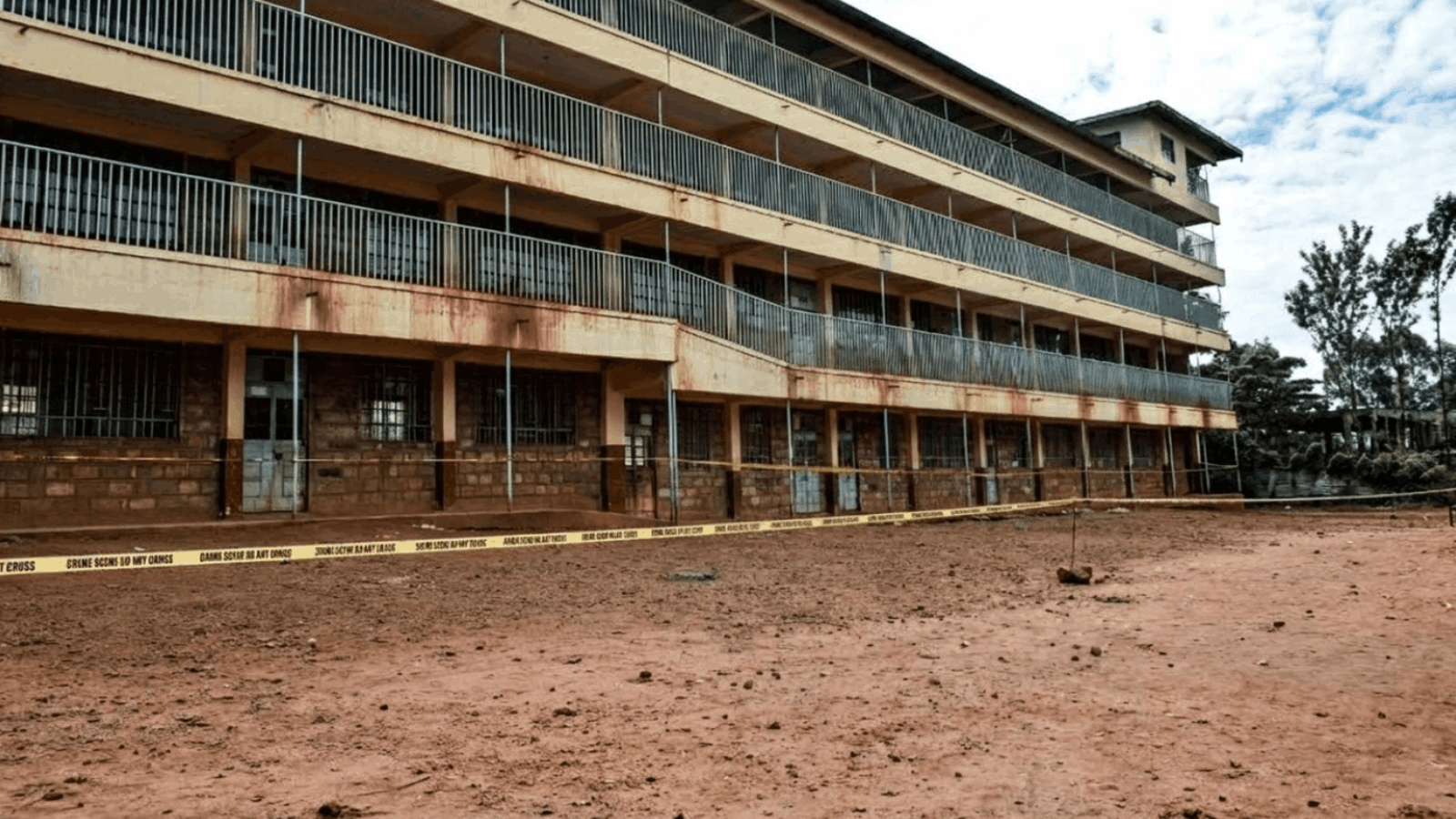
On 3 February 2020, a stampede occurred at Kakamega Primary School in Western Kenya. Fourteen pupils lost their lives and dozens more were injured. What began as a normal afternoon quickly turned into a tragedy that shocked the nation. (Al Jazeera)
Unlike many school disasters, there was no fire, no storm, and no structural collapse. Instead, panic spread among pupils moving through a crowded area of the school. Within moments, children fell, others stumbled over them, and the situation escalated into a deadly crush. (Al Jazeera)
The tragedy reminds us that school safety is not only about protecting learners from rare disasters. It is also about managing everyday risks that can become catastrophic when proper systems are absent.
Lessons from the Tragedy
1. Crowds Need Management
Schools handle hundreds or even thousands of learners every day. Entry points, exits, stairways, corridors, and assembly areas can quickly become dangerous if movement is not properly coordinated.
2. Safety Planning Must Cover Routine Activities
Many schools prepare for unusual emergencies but overlook routine situations such as dismissal time, assemblies, sporting events, and meal times. These periods often involve large crowds and increased risk.
3. Young Learners Need Guidance
Children can react unpredictably when frightened or confused. Clear supervision and orderly movement systems are essential to prevent panic.
4. Every School Needs an Emergency Response Plan
When an incident occurs, staff should know exactly how to respond, provide first aid, contact emergency services, and communicate with parents.
5. Safety Audits Should Include Human Behaviour
Safety is not only about buildings and equipment. Schools should regularly assess how learners move around the compound and identify locations where congestion occurs.
Recommendations for Schools
- Conduct crowd-flow assessments around school entrances, exits, staircases, and corridors.
- Stagger dismissal times where necessary.
- Ensure adequate supervision during arrival and departure times.
- Train staff in emergency response and crowd management.
- Conduct regular safety drills for different scenarios, not only fires.
- Create clear evacuation and movement routes.
- Ensure first-aid responders are available during school hours.
- Review infrastructure to eliminate bottlenecks and congestion points.
Why This Matters Today
The Kakamega tragedy teaches us that school safety is not only about preventing rare disasters. It is about creating systems that protect learners every day.
A safe school is one where risks are identified before they cause harm, where staff are prepared to respond effectively, and where the wellbeing of every learner is treated as a priority.
The loss of fourteen young lives reminds us that even ordinary moments require extraordinary attention to safety.
Sources
Pulse Kenya, “Report sheds light on Kakamega school stampede that killed 14 pupils” (2020). (Pulse Kenya)
Al Jazeera, “More than a dozen students killed in Kenya school stampede” (2020). (Al Jazeera)
A wonderful serenity has taken possession of my entire soul, like these sweet mornings of spring which I enjoy with my whole heart. I am alone, and feel the charm of existence in this spot, which was created for the bliss of souls like mine. I am so happy.
my dear friend, so absorbed in the exquisite sense of mere tranquil existence, that I neglect my talents.
I feel that I never was a greater artist than now. When, while the lovely valley teems with vapour around me, and the meridian sun strikes the upper surface of the impenetrable foliage of my trees, and but a few stray gleams steal into the inner sanctuary.